VO₂ Max & Metabolic Testing:What Your Results Actually Tell You
Metabolic testing measures how your body actually uses oxygen and produces carbon dioxide — turning routine estimates into a physiological baseline specific to you.
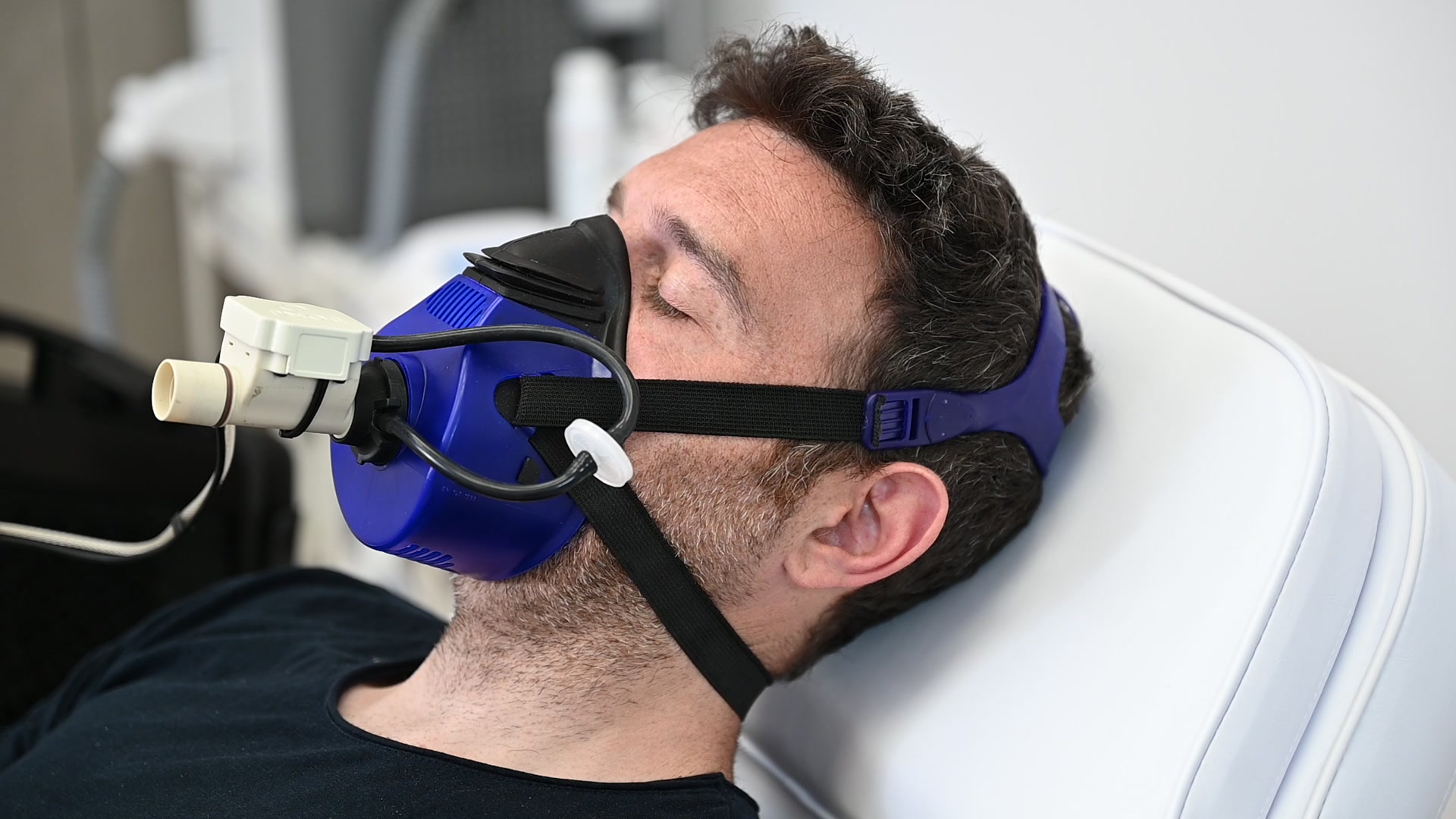
Most fitness numbers are estimates. Metabolic testing lets us look at what your body is actually doing.
Fitness apps, wearables, and generic formulas estimate your cardiovascular fitness and calorie needs using age, weight, and population averages. This page explains what these tests measure, how the measurements are gathered, and how results tend to be used — without medical claims or exaggerated promises.
VO₂ Max Testing and Resting Metabolic Testing
Measure Different Things.

Active VO₂ Max Test
Performed during progressively increasing exercise while a mask captures every breath, measuring the oxygen you inhale and the carbon dioxide you exhale in real time.
- VO₂ Max / VO₂ Peak — your highest measured rate of oxygen use
- Cardiovascular fitness — how oxygen use trends as intensity rises
- Personalized training zones — calculated from your own data
- Fuel use at intensity — respiratory exchange ratio, where supported
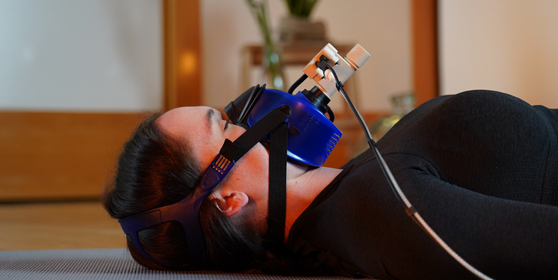
Resting Metabolic Test
Performed while you rest quietly, breathing normally through the mask. No exercise is involved — the test measures your gas exchange at rest.
- Resting Metabolic Rate (RMR) — calories used at rest, from measured gas exchange
- Respiratory exchange ratio (RER) at rest — fat vs. carbohydrate use while resting
- A more individualized starting point for nutrition planning
These two tests are not interchangeable. Many clients complete both in the same visit, but a VO₂ max test reflects how your cardiovascular and respiratory systems respond to increasing effort, while an RMR test reflects your metabolism at rest — two genuinely different measurements.
What Is VO₂ Max?
VO₂ Max reflects how effectively your body can take in, transport, and use oxygen during demanding exercise.
In plain terms, VO₂ max is a measure of how much oxygen your body can take in and put to use during intense exercise. Think of it as a ceiling on your aerobic engine — the higher that ceiling, the more oxygen your body can deliver to working muscles when you’re pushing hard.
More technically, VO₂ max represents the maximum rate at which the body can take in, transport, and utilize oxygen during near-maximal exertion, typically expressed in milliliters of oxygen per kilogram of body weight per minute (ml/kg/min).
- Lungs — take in oxygen from the air
- Heart & circulation — pump oxygenated blood to working muscles
- Blood oxygen transport — carries oxygen through the bloodstream
- Working muscles — extract and use that oxygen for energy
Because it reflects the combined capacity of these systems, VO₂ max is widely used as a measure of cardiorespiratory fitness.
It is not, on its own, a diagnosis of health status — a single number shouldn’t be read as a verdict on your overall wellbeing. It’s one data point that can be tracked over time and interpreted alongside your goals and history.
Why Test Instead of Relying Only on Estimates?
Estimated
- Age-predicted formulas
- Generic calorie equations
- Wearable algorithms
- Population averages
Measured
- Breathing data
- Oxygen consumption
- Carbon dioxide production
- Individual physiological response
These tools have real value. Wearables in particular are excellent for continuous, day-to-day monitoring in a way a single test can’t replicate. A formula-based estimate, though, is built from population data rather than your own physiology, so it can be meaningfully off for any given individual.
Laboratory-style metabolic testing measures your actual respiratory gas exchange rather than estimating it from your age, weight, or heart-rate patterns. That individualized baseline doesn’t replace your wearable — it can make the data your wearable already collects more meaningful, because you now have a directly measured reference point to compare it against.

What Is Resting Metabolic Rate?
Your body uses energy even when you’re doing nothing.
Resting metabolic rate (RMR) is the amount of energy your body uses just to maintain basic physiological functions — breathing, circulation, cell repair, temperature regulation — while at rest.
Even two people with similar age, weight, height, and sex won’t necessarily have identical resting calorie needs. Muscle mass, hormonal factors, genetics, and other individual variables all influence how much energy your body burns at rest, and generic formulas can’t fully account for those differences.
How it’s measured: RMR testing uses indirect calorimetry — measuring the oxygen you consume and the carbon dioxide you produce while resting, then applying established physiological equations to that gas exchange to estimate energy expenditure.
This doesn’t promise weight loss or any specific outcome. What it provides is a more individualized starting point for nutrition planning than a generic calorie formula alone.
How Your Body Uses Fat and Carbohydrates for Fuel
Respiratory Exchange Ratio (RER) — the relative mix shifts with intensity
Respiratory exchange ratio (RER) compares the carbon dioxide your body produces to the oxygen it consumes. That ratio shifts depending on whether your body is drawing more heavily on fat or carbohydrate for fuel at a given moment.
In approachable terms: using fat for fuel produces a lower RER, while relying more on carbohydrate produces a higher one. Measuring that ratio during rest or exercise provides information about the relative contribution of each fuel source at that specific intensity.
Where this information is useful
- Nutrition timing around training
- Endurance training structure
- Exercise intensity selection
- Metabolic flexibility discussions
- Fueling strategy for events or training blocks
This isn’t a “fat-burning zone” in the way that phrase gets used in generic fitness content, and it isn’t a promise of fat loss — it’s a description of fuel use at a specific moment, useful as one input among several when planning training and nutrition.
Why Personalized Training Zones Can Be More Useful Than Generic Formulas
Generic heart-rate zone charts are usually built from an age-predicted maximum heart rate formula, such as 220 minus your age. These formulas are convenient, but individual variation in maximum heart rate — and in how your body responds to different intensities — can be substantial. Two people the same age can have meaningfully different physiological responses to the same relative effort.
Exercise testing measures how your body actually responds as intensity increases, which allows training zones to be built from your own data rather than a population average.
Practical uses for individualized zones
- Recovery — deliberately easy effort that supports adaptation
- Easy aerobic work — sustainable, conversational-pace effort
- Endurance development — building aerobic capacity over longer efforts
- Threshold-oriented training — the intensity range where fatigue accumulates more quickly
- Higher-intensity conditioning — shorter, harder efforts
Whether you’re training for a specific event or simply want a clearer sense of effort during workouts, individualized zones give you a frame of reference a formula can’t.
Not Just for Athletes.

Performance
People who want training guidance based on their own physiology rather than a generic plan.
Longevity-Focused Fitness
People who want an objective cardiorespiratory fitness baseline and a way to track change over time.
Nutrition & Weight Management
People who want a measured resting metabolic baseline to inform nutrition planning.
Returning to Fitness
People who want objective information rather than guessing where to begin.
Data-Oriented Clients
People already using an Apple Watch, Garmin, WHOOP, Oura, or similar device who want another physiological reference point.
Metabolic and VO₂ max testing are fitness assessments, not medical clearance. If you have a health condition or any concerns about exercising at higher intensities, talk with your healthcare provider before completing a maximal exercise test.
What Actually Happens During a Metabolic Test?
The mask may look unfamiliar, but it allows respiratory gases to be measured throughout the assessment.
What Testing Looks Like at DrivenFit
This video shows a VO₂ max assessment performed at DrivenFit’s South Tampa studio.
01Prepare
- Pre-test preparationGuidance on food, caffeine, and activity beforehand so results reflect a representative baseline.
- Mask & equipment fittingA lightweight mask is fitted to capture your breath without restricting normal breathing.
02Set Up
- Baseline measurementsA short resting period establishes your starting point.
03Test
- Resting test or progressive exercise protocolDepending on which assessment you’re completing, you’ll either continue resting quietly or begin a gradually increasing effort on a treadmill or bike.
04Measure
- Breath-by-breath gas measurementThe system continuously analyzes the oxygen and carbon dioxide in each breath throughout the test.
- Completion of the testThe protocol ends once the relevant data has been captured — the end of the resting period, or your test’s exercise endpoint.
05Review
- Results analysisYour breath data is processed into the metrics covered throughout this page.
- One-on-one interpretation with DrivenFitA specialist reviews your results with you and explains what they mean.
- Practical next stepsYou leave with a clear sense of how to apply what was measured to your training, nutrition, or recovery.
The Technology Behind the Test
DrivenFit uses PNOĒ metabolic analysis technology for its VO₂ max and metabolic assessments. PNOĒ analyzes respiratory gases captured during breath-based testing, producing measurements and derived metrics related to oxygen consumption (VO₂), carbon dioxide production (VCO₂), VO₂ max/peak, resting metabolic rate, and fuel utilization.
Testing technology powered by PNOĒ.
We rely on PNOĒ for the underlying measurement technology; the interpretation, context, and guidance you receive is delivered by the DrivenFit team based on your specific goals and history.
Measured Data vs. Calculated Insights
Not every number in a report is a direct instrument reading — this distinction matters, and DrivenFit will always be clear with you about which is which.
Directly Captured
Variables captured directly by the testing system during the protocol.
- Oxygen consumption (VO₂)
- Carbon dioxide production (VCO₂)
- Breathing / ventilation data
- Heart rate, when captured by the protocol
Derived Metrics
Calculated from the measured respiratory-gas data using established physiological methods.
- VO₂ Max / Peak
- Resting energy expenditure (RMR)
- Respiratory exchange ratio (RER)
Interpreted Outputs
Built from the derived metrics and applied to your specific goals and history.
- Training zones
- Fuel-utilization interpretation
- Comparative fitness classifications
- Training and nutrition application
A directly captured value comes straight from the testing instrument. A derived value is calculated from that captured data using established physiological formulas. An interpreted output goes a step further, applying those derived metrics to your specific goals and history. Derived and interpreted don’t mean less reliable — they mean an established method was applied to the raw measurement rather than reading it straight off the instrument.
Your Results Are More Useful
When You Understand Them.
An Example of the Report You’ll Review
Individual reports vary by assessment and results — this sample shows the format and depth of information you’ll receive.
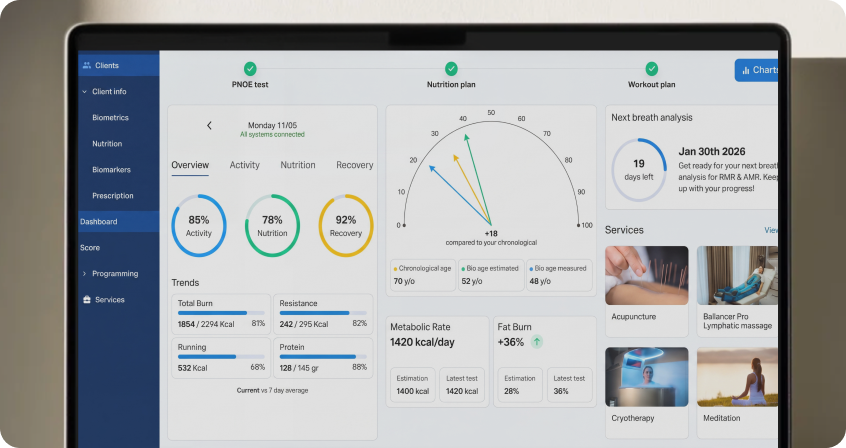
Clients don’t simply receive a report and leave. A DrivenFit specialist reviews the findings with you and translates the results into practical considerations for training, nutrition, recovery, and future testing where appropriate. We don’t promise a specific outcome from that conversation — the goal is that you leave understanding what your results mean and how to use them, not just holding a printout.
Using Your Data Over Time
Retesting can help establish whether a measurable change has occurred after a meaningful period of training or lifestyle change — but there’s no single interval that’s right for everyone. How soon retesting makes sense depends on:
- Your goals
- Your training program
- Your starting fitness level
- Any nutrition changes you’ve made
- The reason you tested in the first place
Rather than following a fixed retest schedule, it’s worth discussing an appropriate interval with the DrivenFit team based on your specific situation.
Does this replace my Apple Watch, Garmin, WHOOP, or Oura? No. Wearables and metabolic testing serve different purposes.
Wearables are built for continuous, longitudinal information: tracking trends in your resting heart rate, sleep, recovery, and daily activity over weeks and months. A metabolic assessment is a single, controlled testing session that measures your physiology directly, under consistent conditions.
The two are complementary rather than competing. Your wearable’s ongoing estimates become more useful when you have a directly measured baseline to check them against.
Frequently Asked Questions
What is VO₂ Max?
VO₂ max is the maximum rate at which your body can take in, transport, and use oxygen during intense exercise. It’s commonly used as a measure of cardiorespiratory fitness.
What is VO₂ Peak?
VO₂ peak is the highest oxygen consumption value actually reached during a specific test. It’s sometimes used interchangeably with VO₂ max, but technically VO₂ max implies a true physiological ceiling was reached, while VO₂ peak simply reflects the highest value recorded during that session.
What is RMR?
Resting metabolic rate (RMR) is an estimate of the calories your body uses at rest for essential functions like breathing, circulation, and cell repair, based on measured gas exchange.
What is metabolic testing?
Metabolic testing is a general term for assessments that measure respiratory gas exchange — oxygen consumption and carbon dioxide production — to evaluate metabolism, either at rest or during exercise.
Is metabolic testing the same as VO₂ Max testing?
Not exactly. VO₂ max testing is one specific type of metabolic test performed during exercise. Metabolic testing can also refer to resting tests like RMR assessment, which measure something different.
What is indirect calorimetry?
Indirect calorimetry is the method used to estimate energy expenditure by measuring oxygen consumption and carbon dioxide production, rather than measuring heat production directly.
What is RER?
Respiratory exchange ratio (RER) compares carbon dioxide produced to oxygen consumed. It provides information about the relative mix of fat and carbohydrate being used for fuel at a given point.
What should I eat before testing?
We’ll send specific preparation guidance once you’re scheduled. In general, avoiding a heavy meal, caffeine, and intense exercise in the hours before testing helps the results reflect a representative baseline.
Can I exercise before the test?
Light activity is generally fine, but we recommend avoiding intense exercise for at least several hours before testing — we’ll cover exact timing when you book.
How long does testing take?
Most sessions run about 30 minutes, though this can vary depending on which assessment you’re completing.
Do I need to be an athlete?
No. Testing protocols are adjusted to your current fitness level, and many clients are focused on health, longevity, or nutrition rather than athletic performance.
Can testing help establish heart-rate zones?
Yes. An active VO₂ max test can be used to establish personalized training zones based on your own physiological response, rather than an age-based formula.
Does VO₂ Max testing replace medical testing?
No. VO₂ max and metabolic testing are fitness assessments, not medical diagnostic tests, and they do not diagnose cardiovascular, metabolic, or other health conditions. If you have health concerns, consult your healthcare provider.
How often should I retest?
It depends on your goals, training, and the reason you tested initially. There’s no universal interval — we can help you decide what makes sense for your situation.
Can my smartwatch measure VO₂ Max?
Many wearables provide an estimated VO₂ max based on heart rate patterns and movement data, rather than direct respiratory gas measurement. These estimates can be useful for tracking trends but are calculated differently from a measured test.
What should I bring?
Comfortable workout clothing and shoes appropriate for walking, running, or cycling, depending on your test.
What happens after I receive my results?
A DrivenFit specialist reviews your report with you in person, explains what the numbers mean, and discusses practical next steps for your training, nutrition, or recovery.
Testing & Educational Disclaimer: Information on this page is provided for educational purposes and is not medical advice. VO₂ max and metabolic testing at DrivenFit are fitness and performance assessments and are not intended to diagnose, treat, cure, or prevent disease or replace evaluation by a qualified healthcare professional. Individual results and appropriate training or nutrition recommendations vary. If you have a medical condition, symptoms, or concerns about exercise testing, consult an appropriate healthcare professional before testing.
Ready to Measure Instead of Guess?
Schedule your VO₂ Max or metabolic assessment at DrivenFit in South Tampa and review your results one-on-one with our team.