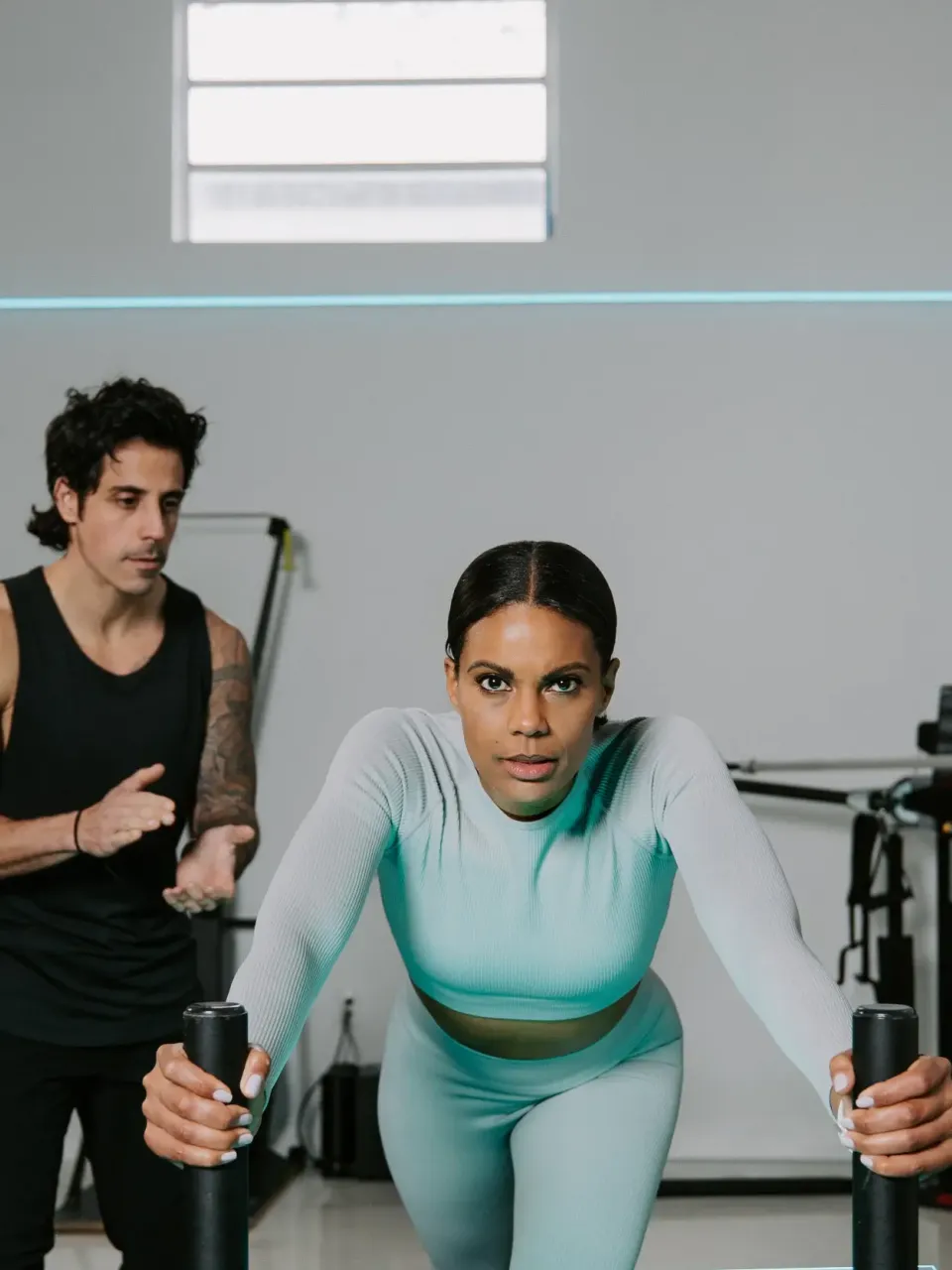
Why Is My Old Workout Not Working During Perimenopause or Menopause?

Your workout may feel different during perimenopause or menopause because your energy, sleep, recovery, body composition, and tolerance for stress can change. The answer is not always to exercise harder.
Sometimes the plan needs to change.
Many women respond to slower progress by adding more cardio, cutting more calories, or pushing through exhaustion. That can turn fitness into a fight with your body. A better approach is to keep training, but adjust the type, intensity, and recovery around what you need now.
The menopause transition can coincide with changes in bone density, body fat distribution, sleep, and other symptoms that affect how training feels.
Why Can the Same Workout Start Feeling Harder?
A routine that worked five years ago may no longer match your current life or body.
You may be dealing with:
- Less predictable energy
- Poorer sleep
- Longer recovery between workouts
- More joint stiffness
- A loss of strength or muscle
- New stress at work or home
- Hot flashes or other symptoms that disrupt exercise
None of this means you should stop training. It means your program needs to be more responsive.
A rigid plan assumes every week will feel the same. Real life does not work that way.
Should You Do More Cardio to Lose Weight?
Not automatically.
Cardio supports heart health, conditioning, and energy expenditure. But adding longer, harder sessions every time progress slows can leave you more tired without solving the real problem.
Strength training should remain an important part of the week. It supports muscle, physical function, and bone health. Current resistance-training guidance also emphasizes consistency and individualized programming over unnecessarily complicated routines.
The goal is not to eliminate cardio. It is to use it with a purpose.
What Does Hormone-Smart Training Actually Mean?
Hormone-smart training is not a medical diagnosis or hormone treatment.
It is a coaching approach that recognizes your training capacity may change. Instead of forcing the same intensity every week, the trainer can adjust volume, resistance, cardio, and recovery based on your energy, symptoms, progress, and goals.
At Driven Fit, hormone-smart training may include:
- Strength training to support muscle and bone health
- Cardio programmed around your current capacity
- Adjustments when energy or recovery changes
- More attention to sleep and stress
- Nutrition habits that support training
- Recovery services when useful
Driven Fit offers hormone-smart training in Tampa for women navigating perimenopause or menopause and for men experiencing age-related hormonal shifts.
How Do You Know if Your Current Plan Is Too Much?
A hard workout is not always a productive workout.
Your program may need to be adjusted if you regularly experience:
- Soreness that never settles down
- Declining strength
- Poor sleep after training
- Exhaustion that affects the rest of your day
- Dread before every workout
- Frequent aches that change how you move
One difficult week is not a crisis. A pattern is worth paying attention to.
The right Tampa fitness trainer should know when to push and when to change the plan.
What Should a Better Weekly Plan Include?
There is no single menopause workout that works for everyone.
A balanced week may include:
- Two or three strength sessions
- Moderate cardio or walking
- Mobility work
- Rest or lower-intensity days
- Enough flexibility for sleep, symptoms, and stress
Some weeks will feel strong. Others may call for lighter loads or fewer sets.
That is not failure. It is intelligent programming.
Why Is Personalized Coaching Helpful?
Online advice cannot see how you move, how well you recover, or what else is happening in your life.
A personal fitness trainer in Tampa can see the full picture and make useful changes before frustration leads to quitting.
At Driven Fit, we start with an evaluation. Your Tampa personal trainer considers your goals, training history, schedule, movement, and current fitness level before building the program.
The goal is not to make every workout easy. It is to make the work appropriate.
When Should You Speak With a Healthcare Provider?
Training can support your health, but it cannot explain every symptom.
Talk with a qualified healthcare provider if you are concerned about sudden weight changes, persistent fatigue, dizziness, unusual bleeding, significant pain, or other new symptoms. Your trainer can work within medical guidance, but should not diagnose a hormonal condition.
That boundary matters.
FAQs About Hormone-Smart Training
Can I still build muscle during menopause?
Yes. Women can continue building strength and muscle with consistent resistance training, appropriate progression, supportive nutrition, and enough recovery.
Should I stop doing high-intensity workouts?
Not necessarily. High-intensity training may still fit your program, but the frequency and timing should reflect your recovery and overall health.
Is hormone-smart training only for women?
No. Men may also benefit from training that accounts for age-related changes in energy, recovery, and performance.
Can exercise treat menopause symptoms?
Exercise may support overall health and help some people feel better, but it is not a replacement for medical care or individualized menopause treatment.
Do I need to be taking hormone therapy?
No. Hormone-smart training can be adjusted to the individual whether or not they use hormone therapy.
Ready to Stop Fighting Your Workout?
Your body may have changed. Your goals do not have to disappear.
Book a free evaluation with Driven Fit and get a Tampa personal training plan built around your current energy, strength, schedule, and goals.